PR, Press Releases

SouthNEXT: A festival for the collision of art and technology celebrates four years

 Social Media Press Release

FOR IMMEDIATE RELEASE

November 9, 2018


Contact: Stephen Schnall

Email: sschnall@southorange.org

  • SouthNext’18 will take place from Nov. 10 to 11
  • According to Stephen Schnall, the founder and producer of SouthNEXT, tickets are FREE for Seton Hall personnel
  • Wristbands for all other attendees are $20
  • Sponsors: Saint Barnabas Medical Center/RWJBarnabas Health, Seton Hall University, The Township of South Orange Village, South Orange Performing Arts Center (SOPAC), Stop & Shop, South Orange Village Center.

Now in its fourth year, the SouthNEXT Festival will celebrate the current state of art and technology and look ahead to the future, exploring how the two collide. SouthNext will run from Saturday, Nov. 10 to Sunday, Nov. 11. The first day’s events will be held at SOPAC with the second day at Seton Hall University.

According to SouthNEXT’s founder and producer Stephen Schnall, the Festival is taking a different perspective this year as compared to years past. He said Seton Hall and it’s students will play a larger role in the event.

SouthNext (2)
Photo via Facebook/SouthNEXT

“Seton Hall has a much larger role in that the expectation is that half of the venues, performers, and attendees come from the school this year,” he explained.

He went on to say that the closing session “Mindfulness in the Community, What comes NEXT” will feature residents from South Orange and Maplewood, a SHU religion professor and two student representatives from the “Concerned 44.”

He added that tickets are free for all Seton Hall personnel, including students. All attendees have to do is click the “Get  Tickets“ button on the website and pick the SHU option. Other participants will need a $20 wristband for entry.

Schnall said that this year’s themes will include mindfulness, technology, community engagement and inspiration. These ideas, he said, will be apparent in all sessions and activities throughout the weekend. For example, attendees will have the opportunity to participate in an interactive mural on Saturday, from 12 to 6 p.m. According to the SouthNEXT website, the mural is comprised of colorful and movable pieces with which people can come together and create what inspires them. The activity will be led by Elina Rosenblum, founder of BlumArts LLC. The website explained Rosenblum’s connection to the artistic community.

“Her curiosity in applying herself to different forms of arts pushes her to experiment, generate tons of ideas and seek creative solutions,” the statement read. “Her desire is to bring beauty and joy to the world by transforming public or homely spaces from dull into delightful with the benefits of color therapy.”

This is just one example of the insightful people and engaging activities attendees will encounter at SouthNext’18!

According to the Festival’s “About” page, SouthNEXT aims to bring the diverse community of South Orange together for the exchange of ideas. One aspect of this is challenging people’s beliefs about what is possible. However, recognizing unity and the “collision” of interests is important to event organizers.

DISCLAIMER: This press release is for a class assignment for my COJR 3422 course at Seton Hall University.




Change, Journalism, PR

A new way to think about news releases

According to PR News, the format and delivery of news releases is changing. What was once thought of as a useful tool to  disseminate important updates or a public statement is now much more. The article explains that news releases should be put out often, essentially following any company update and they should be interactive. This includes a multimedia approach with links to related content, audio, video or images.

The new way of looking at news releases coincides with the popularity of the Internet. More and more people consume of the news through this medium. In fact, as of August 2017, the Pew Research Center reported that 43 percent of American adults often get their news online.

news release post photo
Photo via Unsplash/andrewtneel

The multimedia aspect shows the way in which web content broadens the possibilities of news coverage. Take, for example, a New York Times video on the New York transit system. Here, one can see an organization that is perhaps best known for its print content, producing a video that contains text, references to other material, audio and fast-paced editing. If viewers wanted, they could click off and do independent research based on the people and facts referenced. Also, the pacing and some of the stylistic choices would make it appear as though the Times is targeting the younger audience finding its news on the web.

Since the nature of the Internet is such that it is updated constantly with new content, public relations professionals need to keep the flow of new information about a product or brand going at a consistent rate. Otherwise, there is a danger there that the brand has become “old news” and not worth the audience’s attention.

A final important way to engage the audience is by allowing them to engage with the content. Other than links to follow, many readers would likely enjoy being a part of the conversation.  The article, video or press release functions as a diving board. Now, let them jump in and give their opinions. This can be accomplished in a variety of ways, either by adding a comments section to the piece or website or providing contact information to whom readers can voice their questions, concerns and thoughts.

News releases are no longer disseminated to the public solely at the discretion of an editor publisher. The web allows for direct access to these important updates. As I have said in many of my past posts, the audience is fast becoming the journalist. That also means an added layer of responsibility to decide what is news.

Journalism, PR, Social Media, Upcoming events

Reuters corespondent coming to campus today

Barbara Goldberg, a corespondent for Reuters, will be speaking at 6:30 p.m. in Nursing Room 105. All journalism and public relations students are encouraged to attend. However, this talk is open to all. She will be speaking about how social media plays a role in modern-day reporting.

Reuters is an international news wire service, similar to the Associated Press. The media outlet was founded in 1850 and since then, has garnered award-winning coverage. In 2017 alone, two of its pieces were finalists for a Pulitzer Prize.

Goldberg pic

According to Victor Jeffrey Serote, the organization’s coverage is widespread. Reuters boasts a staff of approximately 2,400 reporters in nearly 150 countries.  The website also claims that Reuters is “the worlds largest international multimedia news provider reaching more than one billion people every day.”

Serote also wrote that, because Reuters corespondents are stationed all over the world, deadlines do not exist at the organization. There is an understanding that stories and other components such as video and photography are due as soon as possible. Serote suggested that this understanding among reporters creates a 24-hour schedule where news is constantly flowing into the organization and being put out.

Reuters’ coverage seems to show a fair deal of variety. It covers everything from economics and politics to entertainment.  For example, as of today,  the homepage of the Reuters website features stories such as “Turkey demands to know who ordered ‘savage’ Khashoggi killing” to “Caterpillar’s shares tumble on disappointing profit outlook.”

According to Barbara Goldberg’s Twitter account, she covers news in the Northeast region. She seems to frequently feature the work of other journalists on her page, from Reuters to The New York Times. 


Blogging, Journalism, PR, Social Media

Twitter: A useful tool or the downfall of journalism and PR?

Okay, admittedly, the title of this week’s post is a bit dramatic and also implies that there is a clear answer. Ultimately, I land somewhere in the middle.

Twitter has its uses, both for journalism and PR. As Forbes suggests, PR professionals can use the platform for announcements, news releases and contest launches among other tactics. In a 2012 post, the late Steve Buttry laid out 10 reasons why journalists should be on Twitter, all of which seem valid. I particularly identified with his top reason, finding breaking news. As Campus Life Editor for Seton Hall University’s The Setonian, I routinely look for stories on social media. 

However, to put it bluntly, there is a risk of getting caught up in the platform and becoming lazy. Based on experience, I can more easily relate to how this affects journalism as opposed to PR. Most journalists cite Twitter as a key place to look for sources. Many articles even have embedded tweets in them as a means of gauging public response to news.  However, according to the Canadian Broadcasting Corporation (CBC) many accounts on Twitter are in fact bots and not real people.

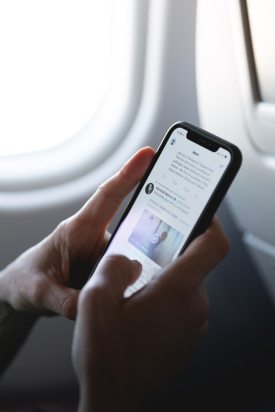
Twitter pic
Photo via Unsplash/Marten Bjork

There is a way to check on this. For example, running account name through Botometer can help determine if the account is real or not.  Since bots are usually designed to participate and share in the spread of propagandized information, a journalist who does not verify his or her source could unwittingly be aiding in this goal.

However, if a journalist or PR professional is careful about their source aggregation, Twitter can doubtlessly be a useful tool. Individuals in both professions can find a litany of ways to gain followers and spread their messages and stories. One way to gain followers on Twitter is to add your name to a directory, as per the Forbes article. If  people want information on a certain topic, you can be listed as a go-to source. If the content is engaging enough, you will likely have yourself a new follower. Forbes also mentions the benefit of adding a twitter widget to your blog, like the one on mine. If you regularly keep your Twitter account updated with regard to upcoming posts and news, visitors to the blog will see that and may follow you to keep updated.

Even though, at the outset of this post, I said I landed somewhere in the middle on Twitter being a must or not for journalism and PR, I will conclude by saying that there are far too many benefits to the platform to ignore it completely. Another way to look at the fields I just mentioned is to point out that they both involve communication. Social media, whether it be Twitter; Facebook; Instagram or whatever platform to be introduced in the years to come, has become the way billions across the globe communicate and connect. To ignore this change is to be in the dark when it comes to the media industry.

On that note, for the latest on what is happening with Julie’s Corner be sure to follow me on Twitter at @SHUSocialJulie.  If you’re interested to learn more about what’s happening at Seton Hall, check out the blog I run with a classmate, Campus Rundown! We can be reached at @CampusRundown.

PR, Social Media, Upcoming events

Stacey Bender to visit SHU

Stacey Bender, CEO of Bender Group Public Relations, will be coming to speak at Seton Hall on Sept. 25 at 6:30 p.m. in Schwartz Hall Room 105. Those interested in her discussion will witness a PR professional that seems to defy expectations. According to NJBIZ, Bender founded her company in 1995, as a mother to four children all under the age of seven. The article frames her as a woman dedicated to both family and business.

These values are evident down to the very structure of her company. On the company website, the Bender “team”, seemingly all upper management, is comprised of only four people, with Bender included. In addition, Bender’s brother, Barry, serves as the company’s CFO. This is not to say that Bender blindly promotes her family members, necessarily. In his bio on the website, Barry Bender has a notable list of experiences, including his eight years as the director of internal audit for Tropicana. This is the main point at which Bender defies expectation. She seems to maintain a wide range of clients and  a high degree of professionalism while still keeping a relationship with her clients, at least that is how she describes her day-to-day business in the NJBIZ piece. 

apple computer desk laptop
Photo by Pixabay on Pexels.com

However, Bender is not the only one who says her company has a personal touch. A quick search on Glassdoor, a website where current and former employees and interns share their experiences at a company, finds that many people note Bender Group PR’s small staff as a positive feature. Glassdoor lists the company size as no more than 50 employees total. It is likely less. The company also announced in June via Twitter that they welcomed in office dog named Sadie, adding to the personal feel.

One Glassdoor user explained that the staff size presents a challenge to consistently stay on top of the workload but that it, overall, served them well as a first experience in the PR world.

The company’s size begs the question of how such a small firm could attract names like Freshpet and Frank’s Red Hot to be among their clients.  Perhaps these questions and more will be answered at the discussion!

Bender Group PR is located in Montclair, NJ. The PR professionals there specialize in media placement, crisis management and social media among other facets of the PR world.

All are welcome to attend the discussion regardless of year or major. However, PR and journalism students are encouraged to attend.


Blogging, Journalism, PR

The benefits of blogging and how to be successful

SEO Chat probably has the most nuanced definition of a blog, as it can be both a tool to share personal messages and opinions as well as news. With blogs, the individual has the opportunity to take journalism or PR campaigns into their own hands. (Many businesses have turned to blogging as well in the interest of transparency with clients.) However, that also speaks to one of the main differences between mainstream journalists and bloggers. Bloggers do not have editors or “gatekeepers” the same way traditional journalists do in most cases, to fact check them and help them keep their stories objective. I understand how this could be liberating but, by the same token, it puts more responsibility on the blogger to self-police and make sure they aren’t contributing to the spread of misinformation.

Just because blogging and traditional journalism operate a little differently does not mean there isn’t inherent value in each and their relationship. In fact, media outlets often look to blogs for news tips and ideas for features, according to the same article by SEO Chat. One of the reasons blogs have been able to stay relevant for so long is how specifically targeted they can be.

Blog 3
Photo via Pixabay/StockSnap

As you’ll notice, this blog most often explores the connection between social media in journalism and PR. However, if an individual or media outlet wanted to look into blogs about poetry or running a small business there are hundreds, if not thousands, out there. One of the keys to finding and maintaining an audience comes with tagging key words and linking to social media, according to Sarah Green. That way, readers can be more quickly drawn to the subject matter. When blogging, no matter the subject matter, transparency and consistency seem to be key elements to maintaining and growing a readership. Consistency is also an element when deciding what topics to cover. If I attract readers based on my discussions of journalism, PR and social media, I’m not likely to switch gears to, say, “the benefits of carpentry” out of the blue.

Visual elements can be crucial to attracting readers to a blog as they break up the monotony of text and usually give clues to what the story or post will be about right off the bat. Images for a blog can be found by either the creator taking them herself or through a free image search. Free image searches can be done through Google Images. Next to the search bar, after you type in your terms and “enter” or “return,” select “Tools” then “Usage Rights” and finally “Labeled for reuse.” This will ensure you are using photos without violating someone’s copyright. Some other websites that contain free use images are Pixabay and Wikimedia Commons.

Following these steps will help ensure that you find or create the blog that’s right for you.


Journalism, PR

Getting the full story with collaboration

The ability to collaborate with one’s audience is arguably one of the more exciting aspects of journalism and public relations in the digital era. As Briggs suggests, collaboration between the professional and her readers/viewers creates the idea of news and reporting as a conversation. In a world where social media has allowed and created the demand for up-to-the-minute updates on stories and PR initiatives, the ability to add to the dialogue is nearly a necessity. 

Not only can readers and viewers add to the pool of information, they are also likely to return to a given website and help drive traffic there if they feel they are a meaningful part of the conversation. This is why a journalist or PR professional should make it a point to always engage with users in the “comments” section of their pages, asking for leads and tips or providing feedback on ideas. Even in cases where comments are negative, a simple reply of “We appreciate your feedback” would suffice. Negative comments, unless they reach the level of hate speech, should always be allowed on the forum as one cannot deny the right of another to contribute (Briggs 111.)

Blog 2
Photo via Pixabay/RachelScottYoga

Last week, we discussed the popularity and usefulness of CNN’s iReport. However, similar crowd-sourcing efforts exist in the world of PR. Take Ketchum Mindfire for example, where users can look at postings from global organizations and help create campaigns to win prizes. Ultimately, professionals can find value in collaboration due to the fact it may expand a person’s worldview, introducing them to new ideas and angles.

Once that dedicated community of collaborators and audience members is built, both journalists and PR professionals can effectively engage in real-time marketing, which allows them to use trends and current events to enhance a product or concept. This is usually accomplished through shareable content like pictures and video. The more in touch a professional is with her audience and its desires, the more effective this strategy will be. A prime example of this marketing method winning big in the PR world is the Oreo Super Bowl blackout tweet, which went viral on social media.

There are some inherent dangers in collaboration, mostly in the legal realm. A professional must ensure they have permission from the creator to use the user-generated content. If she does not have permission, she may well be accused of plagiarism or theft of intellectual property. Another danger is using unverified content in a project and jeopardizing the credibility of the professional. With so much content being  generated online daily, it is becoming increasingly easier to miss something when fact checking. However, it seems the benefits of working with others far outweigh the risks.


Journalism, PR, Social Media

Exciting change unfolding before us

The Economist seems to have the best definition of social media by classifying it as an ecosystem for the exchange of information. Much like any environment, social media platforms have evolved not only in the growing ease with which users can share information, but also in the way they are perceived by professional journalists.

Throughout the last few decades, the context in which news consumers share information has shifted from print to digital. What may then have been spread by text or broadcast evolved into email forwards and yet again into the “share” button on Facebook. With how important the individual has become in the spread of news, he or she has changed the face of the newsroom. Media outlets are more reliant upon, or more willing to integrate, user generated content in their stories. The Economist uses the example of iReport being an important tool for CNN to receive information from people in Japan during the 2011 earthquake. Reliance on civilian reports allows journalists to quickly gather and generate stories from around the world. A similar change occurred in the field of public relations (PR.) In times of crisis, social media can be an effective tool to get a statement out to millions at once. In fact, the PR field overall is shifting many resources to social media campaigns.

I believe, much like the central message of the readings for this week, both journalism and PR will always exist as industries. Whether it be a desire to ensure the clarity and effectiveness of a message or the correctness of a news story, people will always look to these professionals to help spread and verify information. Even at times when most do not actively seek this, it is still needed. This idea is perhaps best illustrated by the Pizzagate scandal surrounding the 2016 Election in which a man was led to raid a pizzeria based on propaganda and misinformation.

The greatest change we are likely to see, and have seen, across these industries is an effort to increase the immediacy with which information is released to the public. The public is in a space where it expects news to flow as events are unfolding. Tools such as Facebook Live are likely to be used more often as a result of greater demand. Also, just by nature of the usual brevity of social media posts, long-form journalism will likely decrease in popularity as people continually look to their feeds to keep informed. Neither of these changes or related others are particularly frightening, as long as the prospect of learning does not frighten PR and journalism practitioners. In fact, the rapid change of media and how it is consumed should be taken as an encouraging sign. That which remains stagnant usually dies out.